
How to Wear a Silk Scarf with a Coat: 7 Elegant Ways for Fall 2026
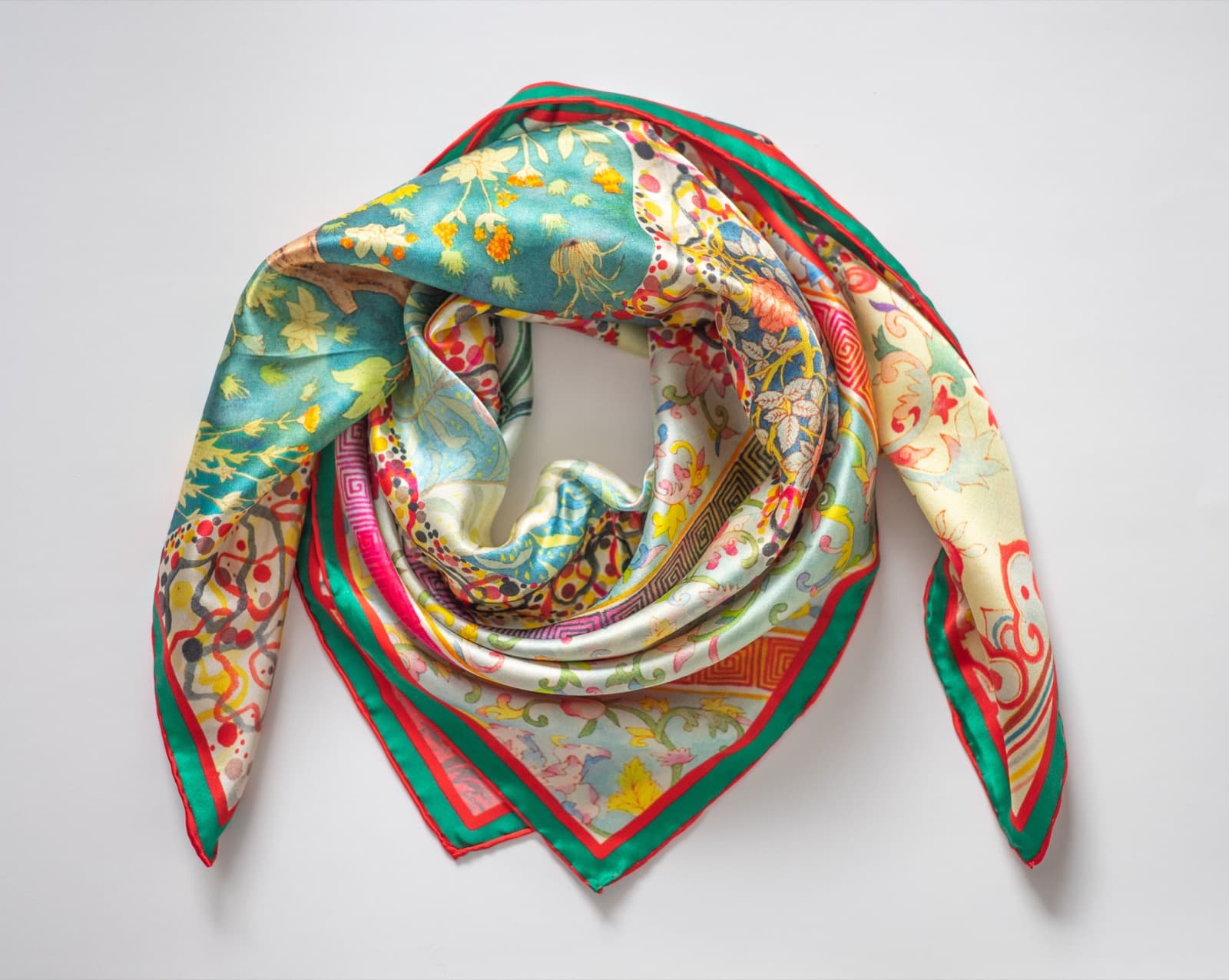
Shop the Looks in This Guide
Quick product picks inspired by this article.

BLOSSOM BIRDS - Double-Sided Hand-Painted Silk Scarf | 100% Mulberry Silk Head Wrap
Square Silk Scarf

CARNIVAL WONDERLAND A - Double-Sided Hand-Painted Silk Scarf | 100% Mulberry Silk Head Wrap
Square Silk Scarf
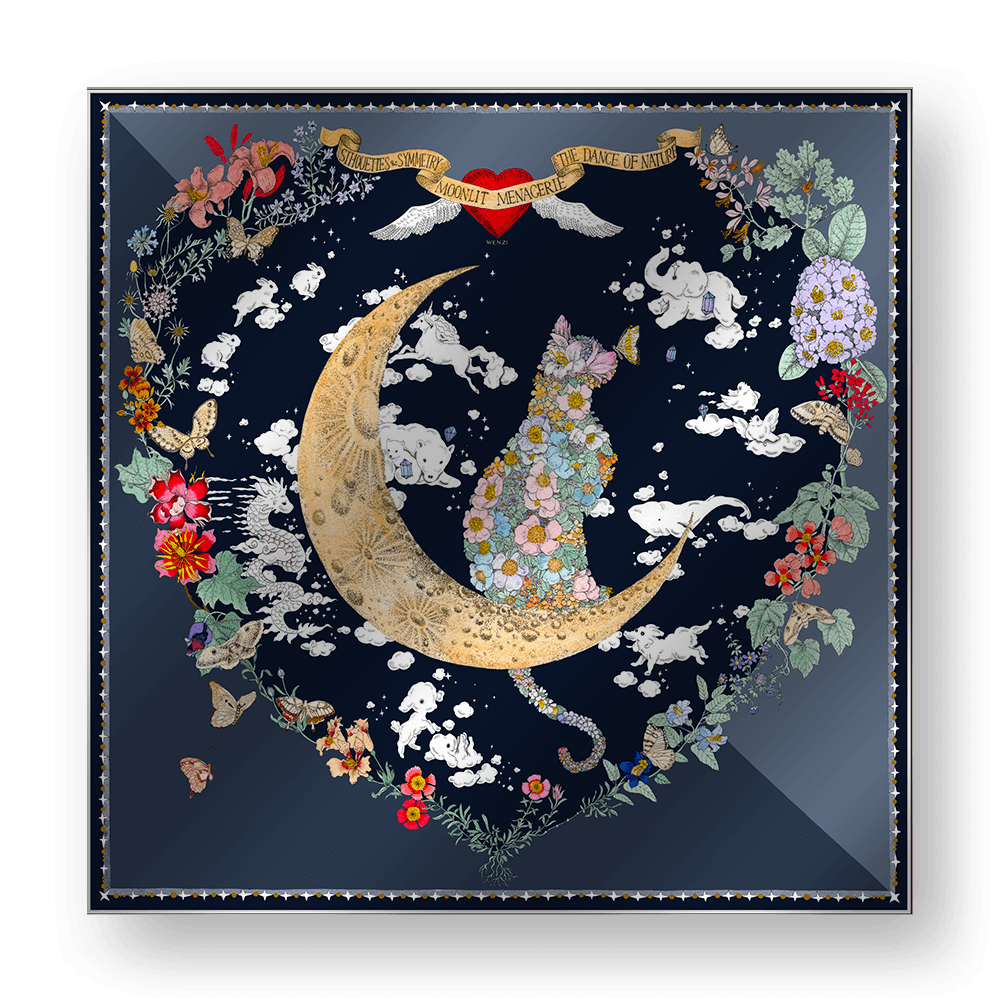
MOONLIT MENAGERIE A - Double-Sided Hand-Painted Silk Scarf | 100% Mulberry Silk Head Wrap
Square Silk Scarf
Coat season is scarf season, but most of what we see on the street is chunky knit. Silk does something wool cannot: it brings colour and light right up to the face, it layers under a lapel without bulk, and it turns a plain coat into something that looks deliberate. Here are seven ways to wear a silk scarf with a coat this fall — from the office trench to the weekend wool. If your coat is a trench, start with the dedicated silk scarf with a trench coat guide; this piece covers the rest of the closet.
Why Silk Over Wool Works
Texture contrast is the whole point. Matte wool or gabardine next to the sheen of mulberry silk is what the eye registers as "put together." A square scarf also traps a surprising amount of warmth at the neck, which is where you actually feel the cold. And because the scarf sits at the collar, it is the first thing anyone sees — before the coat, before the bag.
1. The Collar Tuck (Trench Coats)
The cleanest option for a trench or a tailored wool coat with a notched collar.
- Fold a 90 cm square diagonally, then roll from the point into a band about 6–8 cm wide
- Wrap once around the neck and tie a small square knot slightly to one side
- Tuck both tails inside the coat so only the band shows at the collar
Works best with a scarf that has a defined border, so the band shows a clean stripe of colour. The Arboreal Reverie has a red-and-green edge that reads as a crisp line against beige gabardine.
2. The French Loop (Camel & Wool Coats)
The Parisian default, and still the most flattering.
- Fold the square into a triangle, then fold the point in toward the long edge twice to make a wide band
- Centre it at the front of the neck, cross behind, and bring the ends forward
- Tie once loosely and let the ends sit over the coat, not under it
Against camel wool, choose a scarf with depth rather than brightness. Fruitful Elegance A — navy with a steel-blue baroque border — is the old-money answer to a camel coat.
3. The Open Drape (Long Scarves Under Lapels)
For long coats and anyone who dislikes knots. Hang a long silk scarf around the neck, untied, with the ends falling inside the open coat like a second pair of lapels. It moves when you walk and shows the artwork at full length.
The Arboreal Reverie long scarf and the Mosaic of Mythos long scarf were both painted with this drape in mind — the composition changes along the length, so each side shows a different passage.
4. The Shoulder Shawl (Evening Coats)
Open a long scarf fully and lay it across the shoulders over a coat or cape, letting it fall to the elbows. One end can be thrown back over the opposite shoulder. This is the move for a restaurant, a gallery opening, or any evening when the coat stays on. Our quiet luxury guide covers the understated version; for drama, choose a double-sided design so both faces show as it folds.
5. The Belted Coat (Wrap Coats)
Replace the self-belt of a wrap coat with a long silk scarf or a twilly. Thread it through the belt loops, knot at the hip, and let the ends hang. It defines the waist and adds a stroke of colour low on the body, which balances a scarf-free neckline. The full method is in the bandana belt guide.
6. The Handbag Tie (Any Coat)
Not every day calls for silk at the throat. Tie a twilly around the handle of your bag — a bow at one end, or wrapped the full length of the strap. It brings the colour of the scarf into the outfit without competing with a statement collar. The Mystic Woodland A and Botanical Harvest twillies are both autumn palettes made for this.
7. The Headscarf (Windy Days)
Fold a square into a triangle, place the fold along the hairline, and tie under the chin or at the nape. Add sunglasses. It is practical on a cold lakefront walk and looks like a decision, not a compromise. The head scarf guide goes through the variations.
Pairing Silk with the Coats You Own
| Coat | What to look for | Try |
|---|---|---|
| Camel wool | Deep navy or forest green, defined border | Fruitful Elegance A, Arboreal Reverie |
| Black tailoring | Light ground or pale blue to lift the face | Porcelain |
| Navy | Tonal navy with a lighter border, or warm contrast | Moonlit Menagerie A |
| Grey | Anything with warmth — reds, ochres, greens | Arboreal Reverie |
| Beige trench | A clean border for the collar tuck | Forest Circus |
Weight Matters in Autumn
Lightweight silk twill is right for September and for layering under a scarf-friendly collar. By late October, a heavyweight double-sided twill holds a knot better in wind and gives a little real warmth. Our heavyweight squares — the Woodland Bear among them — are printed on both faces, so the French loop shows two artworks as it folds.
Two Small Cautions
- Keep silk away from Velcro closures and rough zip pulls on outerwear; they snag.
- If the scarf sits against a wool collar all day, give it a night off between wears so the fibres recover. Everything else is in the silk care guide.
Choose your coat scarf: start with the 90 cm squares for knots and tucks, or the long scarves for the open drape. Every design is painted on paper in Toronto, printed on mulberry silk, and ships free within Canada and the US. Trench owners: silk with a trench.
Shop Related Scarves
Quick picks matched to this guide, so you can apply these styling ideas right away.

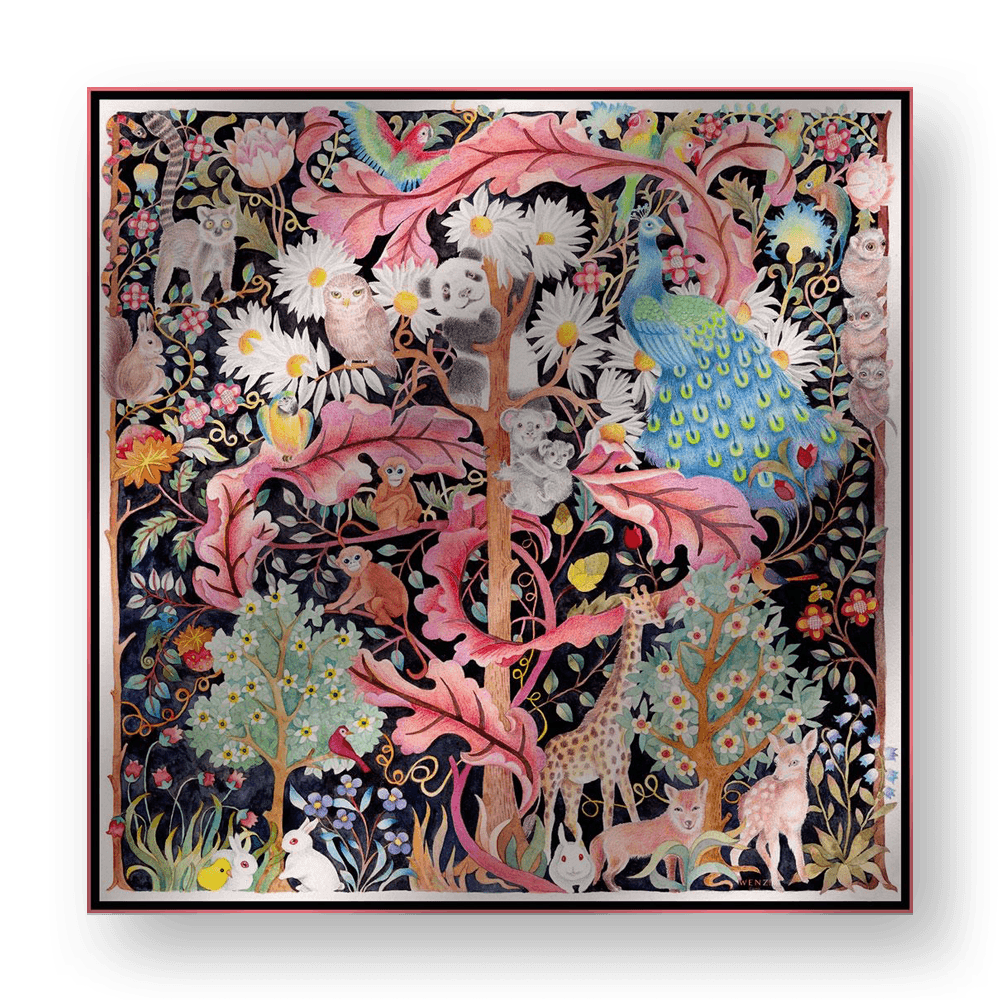
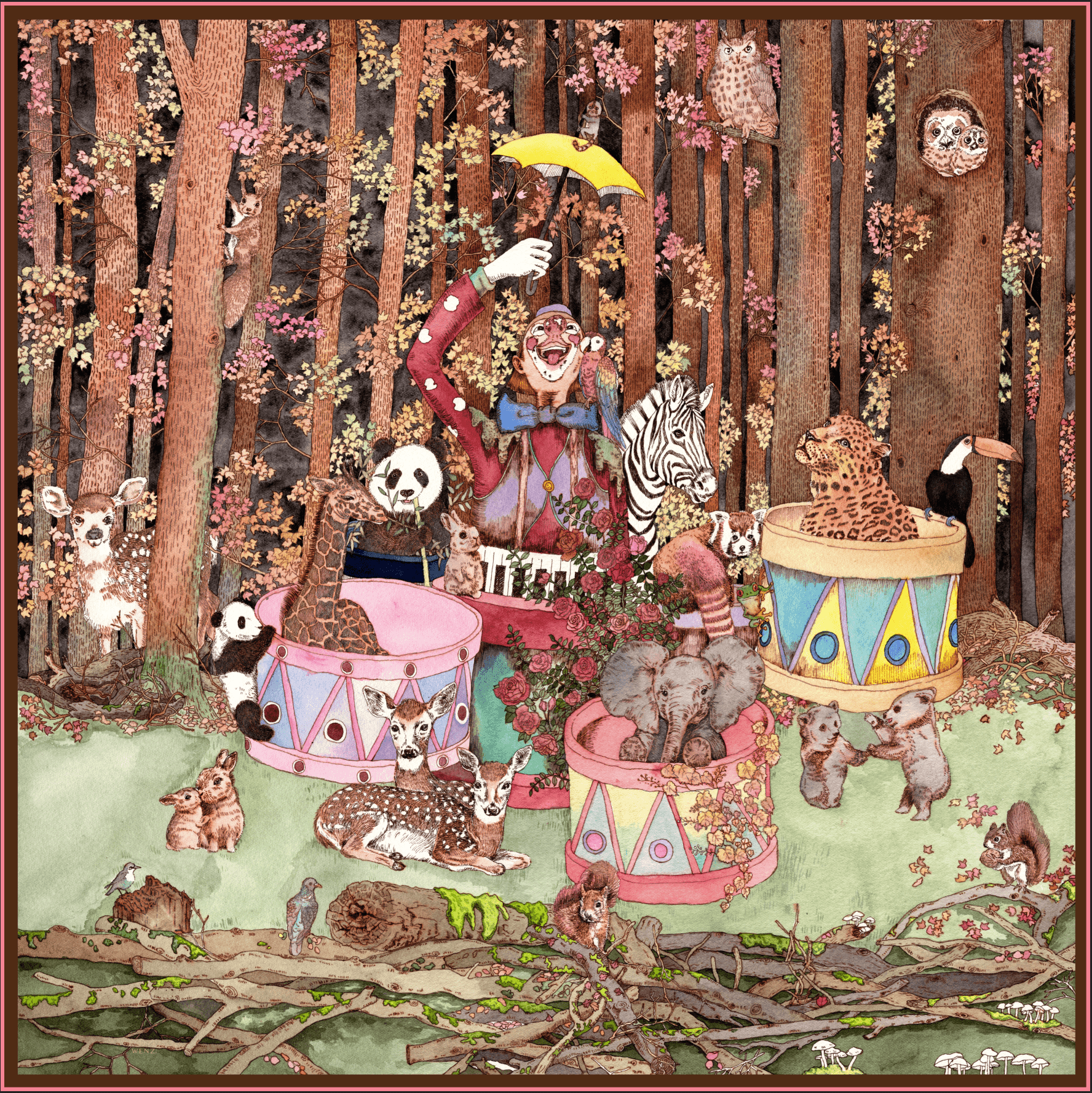
Ready to find your perfect silk scarf?
Explore hand-painted mulberry silk scarves designed as wearable art—gift-ready and timeless.